Honored to be receiving such kind reviews…

Jan GreeneNov 18, 2013 Jan Greene rated it 5 of 5 stars
Recommends it for: Parents and teachers of kids K-5.

A great book to remind kids about caring for the environment. The quilted artwork is pretty incredible too! I will read this to each of my grandchildren.

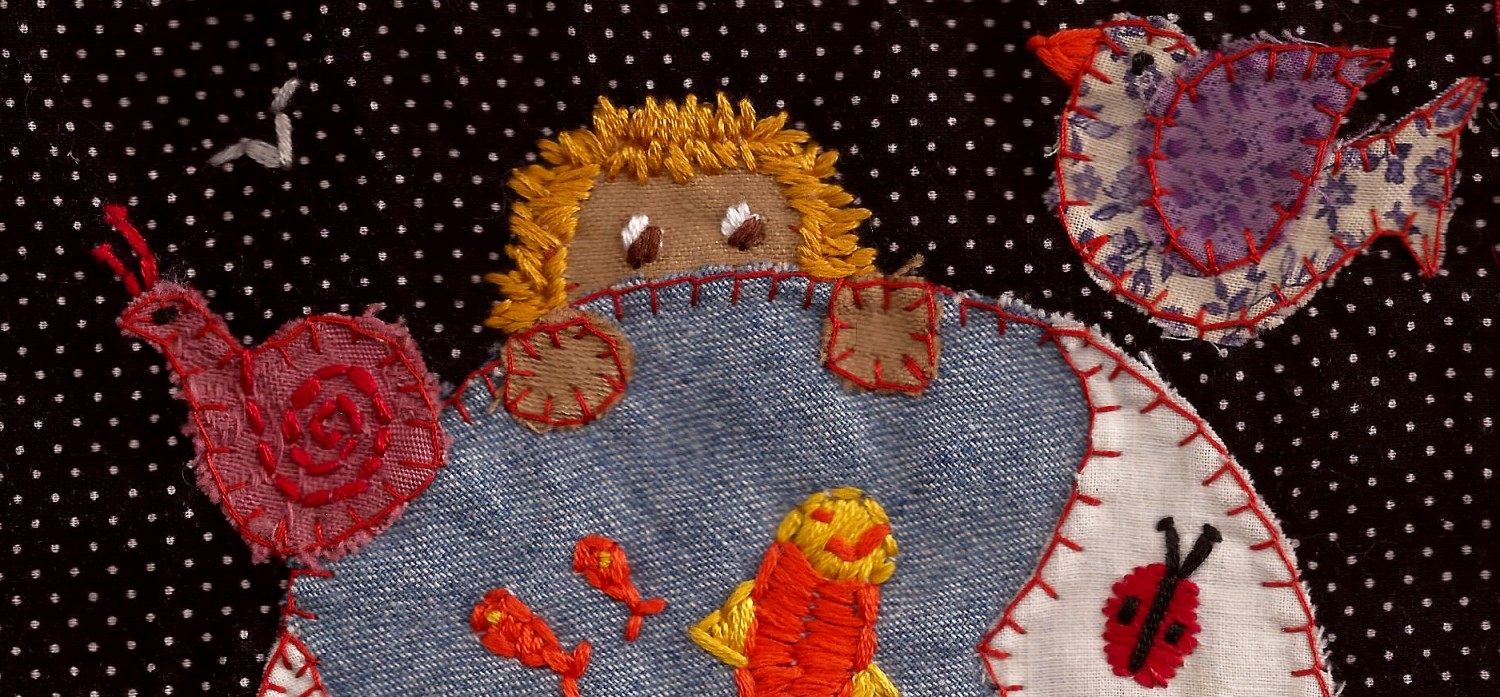
I thought this book was very cute and helps raise good points on what we can do to help our environment and world. It is easy for a child to understand how they can help. I cannot imagine how long it took to make each quilt square. The amount of detail is unbelievable. I am very honored to have received this since it was out of print for so many years. I am glad that it is back in print because this is a topic that we should be teaching our children today.

GIVE YOUR KID A STICK FOR CHRISTMAS.

project wild thing

Or maybe a rock.

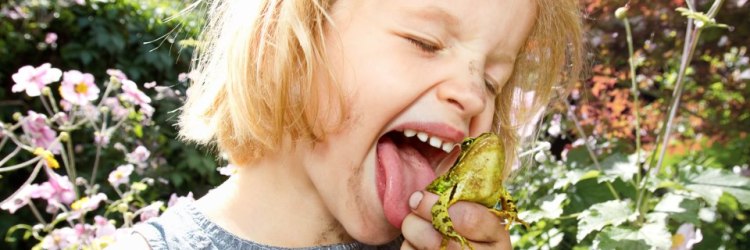
Whether in our heart of hearts or the deepest darkest Peru of our subconscious we all know that the omnipresent ambush of technology is not doing our kids any favors.  Sure they can Tweet at 6 and Vine at 9 and do god knows what at 12 but the more important question is what are are they not doing… getting dirty? Mucking around?  Taking direction from no one and nobody while spontaneously connecting with the planet on which they live?

This Christmas take a cue from Project Wild Thing created by David Bond, self-appointed Marketing Director for Nature. Unplug  your kids and throw throw them out the door.  You’ll be glad you did.  And so will they.

Check out at the Kickstarter video (below) to get the gist though happily their documentary was fully funded on December 6.  Now all we have to do is get our lazy butts in front of the film.

GAMES FOR CHANGE – Catalyzing Social Impact Through Digital Games

Games for Change is the leading global advocate for supporting and making games for social impact.  Non-profit curators of 138 very cool, very innovative video games.  Their games?  Awesome.  Their mission?  Game changing.  

WHAT PEOPLE ARE SAYING  “At least two generations of people have grown up with games and … it is part of their DNA to want to express themselves in that form. The bandwidth [of videogame emotion] is usually tension and competition—a sense of aggression. That’s changing.” Tracy Fullerton, professor at the University of Southern California

Mission Statement:

Catalyzing Social Impact Through Digital Games

What they do:

Founded in 2004, Games for Change facilitates the creation and distribution of social impact games that serve as critical tools in humanitarian and educational efforts.

WHAT PEOPLE ARE PLAYING

Neocolonialism_FeaturedImage

Ruin the world by manipulating parliaments and exploiting the working class. Also, the map isgame details
Dumbwaystodie2

“I solemnly swear to not do dumb stuff around trains.”game details
CodeFred

How do your body’s systems work? Learn by helping Fred survive a terrifying night in the woods.game details
ClimateDefense

Can you prevent global warming? “Let’s Pretend.”game details
ZombiesRun_Featured

Need motivation to exercise? Try outrunning the zombie apocalypse.game details
PlagueInc_Featured

Infect as many people as possible before humanity finds a cure.game details
SideKickCycle

Every 387 downloads of this bike racing game sends a bicycle to an impoverished community.game details
UpliftedFeature

Launch your character across challenging platforms in a quest to become happy.game details
SuperSightFeature

Battle against your fears to learn problem-solving strategies.game details
BioharmoniousFeature

Resolve the desolation of the balance between nature and machinery.game details
and many, many more…

1018 Thanks. And counting.

When I started the relaunch of Long Live Earth 6 weeks ago I didn’t know what to expect.  Yesterday the website broke a thousand views – many, many thanks to all that have taken the time in their busy days in this busy world to take a peak.  Only 5 days left to pre-order  – 10% of proceeds from all pre-orders to be donated to 350.0rg (working tirelessly to solve the climate crisis).  A happy and safe Thanksgiving to all.

Earth home stanz pic

AIRPOD – THE ADORABLE AIR POWERED CAR.

Less that $10,000, zero emissions, runs practically for free using compressed air and cute as a button.

Seriously?  WHERE DO I SIGN UP?

Why have I not heard about this amazing vehicle until now?  It has been in production for years but apparently several fits and starts have prevented it from getting to the US market thus far (though it is already in use in France and India).  I have a sneaky suspicion some of those big car corporations are none too happy to see this baby take off.  Well, tough beans because word is that the Airpod will be available stateside by the summer of 2014.

“Airpods for Everyone!” I say.  Get ready to drive the new People’s  Car.

All that’s left to do is pick your model and your color.

See all options here.

UN climate talks near end with money at issue. And so it goes.

 “We could have saved the Earth but we were too damned cheap.” – Kurt Vonnegut

Kurt Vonnegut LA Times

Kurt Vonnegut survived the WWII Allied firebombing of Dresden, Germany, when he was a prisoner of war. (Caption and photo Los Angeles Times)

U.N. Climate Talks Near End, With Money at Issue

By David Jolly

Published: November 22, 2013

WARSAW — The United Nations climate conference ambled toward a conclusion on Friday, with delegates

saying that the meeting would produce no more than a modest set of measures toward a new international

agreement two years from now. As usual, the biggest dispute was over money.  (Entire article here.)

Can’t See The Forest For the Trees…

In this case the trees are dollars and the forest is the future of our children.

images-2

I live in town where Helen Keller once lived.  The middle school is named for her and there are reminders of her peppered throughout the school and the town.  I think of her often.  It’s difficult to imagine the challenges she faced.  We all know her story.  She was both deaf and blind but that did not stop her from being able to see or from being able to hear.  Or from being able to speak her wisdom.

Alone we can do so little; together we can do so much.”  –  Helen Keller

All of you folks at the UN climate talks (that includes you, Australia, and you, America and Japan and Canada and the list goes on)… listen up.  Here is the latest report card on your progress (or lack thereof).

It’s not good enough. Not even close.

From the Voice of America
FINANCIAL DISPUTES HAMPER UN CLIMATE TALKS
Pamela Dockins

November 21, 2013

WASHINGTON — Disputes over finances have hampered progress at U.N. climate talks in Poland as delegates debate how to best provide aid to help developing countries fight global warming.
 
Meanwhile, a small group of protesters outside the talks expressed displeasure over how financial issues have bogged down efforts to prevent climate change.
 
Developing countries are challenging wealthy nations to follow through on a pledge to allocate $100 billion a year to help them deal with climate change. The commitment is supposed to be in place by 2020, yet there is concern that industrialized nations are not living up to that promise, according to Simon Bradshaw, a climate change spokesman at Oxfam.
 
“The worry is that developed countries just have not delivered fast enough on the finance commitments that were made right back in 2009. We have seen very little new money on the table this year and we have not seen strong, credible plans from any country on how they are going to scale up their contributions,” said Bradshaw.
 
The talks on climate change are taking place as the Philippines continues to reel after being devastated by Typhoon Haiyan.
 
The World Bank estimated that global economic losses causes by extreme weather — such as this storm — have risen to nearly $200 billion annually and could continue to rise as climate change worsens.
 
However, the talks have come at a time when many industrialized nations are trying to spur growth in their stagnant economies.
 
“We cannot have a system where there will be automatic compensation whenever severe weather events are happening in one place or other around the planet.  You can understand why this is not feasible,” said Connie Hedegaard, the European Commissioner for Climate Action.
 
Mary Sering, the Philippine representative at the talks, criticized the lack of an agreement on greenhouse gas emissions.
 
“If we are to review our progress, would it be right for me to conclude that we failed miserably?  Looking at science and how it manifested itself, not only at Typhoon Haiyan but also other events, like Katrina in the United States, the heat wave in France, the wildfires in Australia, and other extreme events occurring after observed increased warming, should we not be all ashamed being here?” asked Sering.
 
The conference continues through Friday. The group hopes to lay the groundwork for a 2015 climate agreement.


Yeb Sano, climate chief of the Philippines, tells the 2013 UN Climate Conference in Warsaw, Poland

Tell Mayors, Prime Ministers, Presidents, too, how very important the Earth is to you.

CLIMATE CHANGE – “IF NOT US, WHO? IF NOT NOW, WHEN? IF NOT HERE, WHERE?”

TYPHOON HAIYAN:  WHAT REALLY ALARMS FILIPINOS IS THE RICH WORLD IGNORING CLIMATE CHANGE
 
As Haiyan batters the Phillipines, the political elites at the UN climate talks will again leave poor countries to go it alone

The Guardian – Friday 8 November 2013 09.31 EST

 
Philippines Haiyan
Super-typhoon Haiyan, an equivalent category 5 hurricane, hits the coastal area of Laguna de Bay. Photograph: Herman Lumanog/ Herman Lumanog/Demotix/Corbis

Friday 8 November 2013 09.31 EST

 I met Naderev Saño last year in Doha, when the world’s governments were meeting for the annual UN climate talks. The chief negotiator of the Filipino delegation was distraught. Typhoon Bopha, a category five “super-typhoon” with 175mph winds (282km/h) had just ripped through the island of Mindanao. It was the 16th major storm of the year, hundreds of thousands of people had lost their homes and more than 1,000 had died. Saño and his team knew well the places where it had hit the hardest.

“Each destructive typhoon season costs us 2% of our GDP, and the reconstruction costs a further 2%, which means we lose nearly 5% of our economy every year to storms. We have received no climate finance to adapt or to prepare ourselves for typhoons and other extreme weather we are now experiencing. We have not seen any money from the rich countries to help us to adapt … We cannot go on like this. It cannot be a way of life that we end up running always from storms,” he said. He later told the assembly: “Climate change negotiations cannot be based on the way we currently measure progress. It is a clear sign of planetary and economic and environmental dysfunction … The whole world, especially developing countries struggling to address poverty and achieve social and human development, confronts these same realities.

“I speak on behalf of 100 million Filipinos, not as a leader of my delegation, but as a Filipino …” At this point he broke down.

Saño was uncontactable today, because phone lines to Manila were down, but he was thought to be on his way to Warsaw for the UN talks, which resume on Monday. This time, with uncanny timing, his country has been battered by the even stronger super-typhoon Haiyan, one of the most powerful ever recorded anywhere – 25 miles (40km) wide and reaching astonishing speeds of possibly 200mph (322km/h).

We don’t yet know the death toll or damage done, but we do know that the strength of tropical storms such as Haiyan or Bopha is linked to sea temperature. As the oceans warm with climate change, there is extra energy in the system. Storms may not be increasing in frequency but Pacific ocean waters are warming faster than expected, and there is a broad scientific consensus that typhoons are now increasing in strength.

Typhoon Haiyan, like Bopha, will be seen widely in developing countries as a taste of what is to come, along with rising sea levels and water shortages. But what alarms the governments of vulnerable countries the most is that they believe rich countries have lost the political will to address climate change at the speed needed to avoid catastrophic change in years to come.

From being top of the global political agenda just four years ago, climate change is now barely mentioned by the political elites in London or Washington, Tokyo or Paris. Australia is not even sending a junior minister to Warsaw. The host, Poland, will be using the meeting to celebrate its coal industry. The pitifully small pledges of money made by rich countries to help countries such as the Philippines or Bangladesh to adapt to climate change have barely materialised. Meanwhile, fossil fuel subsidies are running at more than $500bn (£311bn) a year, and vested commercial interests are increasingly influencing the talks.

As the magnitude of the adverse impacts of human-induced climate change becomes apparent, the most vulnerable countries say they have no option but to go it alone. The good news is that places such as Bangladesh, Nepal, the small island states of the Pacific and Caribbean, and many African nations, are all starting to adapt their farming, fishing and cities.

But coping with major storms, as well as sea level rise and water shortages, is expected to cost poor countriues trillions of dollars, which they do not have. “Time is running out,” Saño told the world last year. “Please, let this year be remembered as the year the world found the courage to take responsibility for the future we want. I ask of all of us here, if not us, then who? If not now, then when?  If not here, then where?”